Category: Picture Book

  • Read Me This Book – “Cat”

    David loves pop-up books.
    David also loves cats.
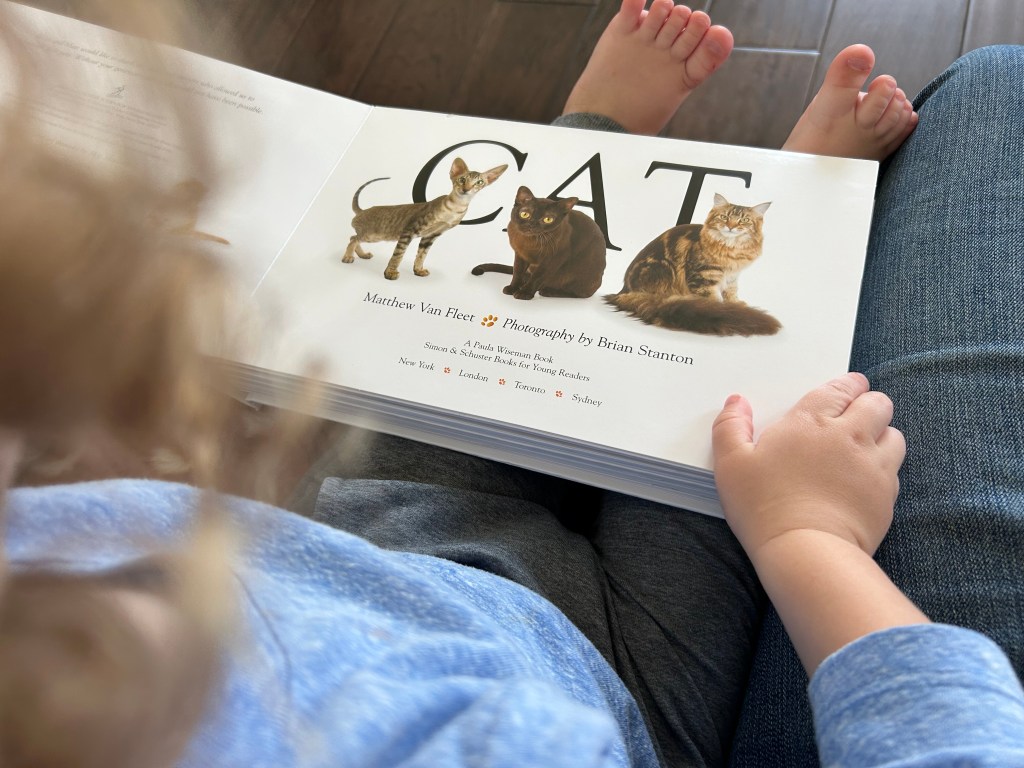
    So, it is no surprise that David loves to have me read the pop-up book Cat…repeatedly.

    Summary:
    There is no “plot” to this pop-up book.
    Instead, there are photographs of over 20 breeds of cats. These personality portraits are labeled with clever names like “cool cat” or “alley cat” or “scaredy-cat”.
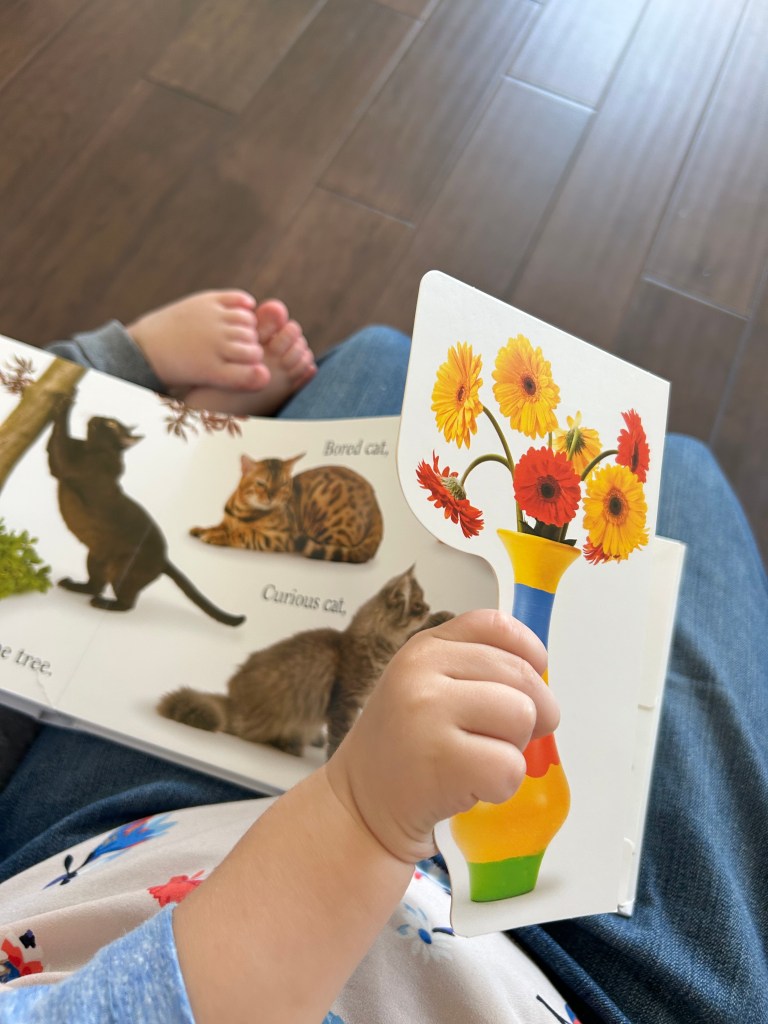
    Young readers (and old) can play with multiple interactive pull-tabs and flaps that have cats “dipping” their paws in fishbowls, “pushing” balls of yarn or “peeking” out of rainboots.
    The final pages feature the entire cast of cats, and one dog, with each of their names and breed.

    Audience:
    Two truths:
    1. Toddlers love pop-up books, however,
    2. Pop-up books break.
    My David is a toddler and an expert destroyer of a pop-up book.
    But Cat is a particularly well-designed pop-up book. The flaps and tabs are thick enough to survive the tugging and pulling of his toddler fingers.
    Cat lovers could be another target audience. The cat portraits are charming and often humorous. The third of American households that own a cat might enjoy the portrayal of the different breeds.

    Author/Illustrator
    Matthew Van Fleet is a creative artist with multiple pop-up books to his credit. Several of his pop-ups feature other animals: Dog, Pet, Moo.
    He is a best-selling author with over 9.6 million copies of his books sold.

    Van Fleet’s collaborator Brian Stanton is a commercial photographer with a stellar ability to capture an animal’s personality.

    Reading Opportunities:
    Question: Can a two-year-old get a joke?
    Answer: One of the interactive puns delights David.


    A vase is pictured on a flap.
    David lifts the flap.
    A mortified cat is pictured beside broken pieces of the vase.
    I read and exclaim, “Catastrophe!”
    David chortles at the cat and points to the broken vase.
    He lifts the flap again and again and giggles each time.
    Proof that the pop-up book Cat is both artfully designed and that, yes, toddlers get the joke.

  • Read Me This One- “We’re Going on a Bear Hunt”

    This past fall (2025), National Public Radio celebrated the 35th Anniversary of Michael Rosen and Helen Oxenbury’s picture book “We’re Going on a Bear Hunt”. My own 35 year old copy is well-worn, so I bought one of the anniversary copies to read to Sloane and David.

    The picture book was very well-received!

    SUMMARY:
    The story of We’re Going on a Bear Hunt is based on a camp song, a call and response musical dialogue between the reader and a chorus.
    The leader sings each line (the call) which is then repeated by the chorus (the response) in a chant:

    LEADER: We’re going on a bear hunt!
    CHORUS: We’re going on a bear hunt!
    LEADER: We’re gonna catch a big one!
    CHORUS: We’re gonna catch a big one!
    TOGETHER: What a beautiful day!
    We’re not scared…
    .

    Now, in addition to the song, there are hand motions:

    LEADER: Oh no!
    Grass! Tall, wavy grass! (wave hands)
    TOGETHER: Can’t go over it!
    Can’t go under it!
    Gotta go through it!
    Swishy swashy, swishy swashy, swishy swashy, swishy swashy

    (hand motions separate imaginary high grass)

    The bear hunt goes through the mud (squishy-squish), a river (splish-splash), and a forest (stumble-trip) until the participants enter a deep-dark cave with (you guessed it!) A BEAR!

    AUDIENCE:
    Children ages two (2) years and older LOVE participating in reading a book and singing verses that include hand gestures. Older children, and most adults, may already be familiar with this bear hunt song.

    AUTHOR/ILLUSTRATOR:
    Michael Rosen (79) and Helen Oxenbury (89) are neighbors and during the NPR interview, they discussed how they combined their different ideas in creating the original picture book. Rosen had thought the story should be “a bit like Carnival” whereas the soft-spoken Oxenbury saw the story as a family adventure of older and younger siblings.

    Their collaboration 35 years ago reflects Oxenbury’s watercolor artistry across different landscapes because, as she noted, “it’s a very English way of painting.”

    Rosen and Oxenbury released their latest collaboration “Oh Dear, Look What I Got”-a storytime comedy of misunderstandings- in September 2025. This picture book has also received high praise, “from a team whose talents haven’t aged a day.” (Kirkus Reviews)

    OTHER:
    Sloane was an enthusiastic participant in the bear hunt from the start. She quickly understood how to respond and when to use hand motions. But she also was very solemn in her advice after reading, “Grandma, we should not try to wake up a real bear, OK?”

  • Read Me This One-“Wolf in the Snow”

    Winter is here, and Sloane is looking forward to snow.
    She has also developed a serious interest in wolves (or “wolfs” as she calls them).
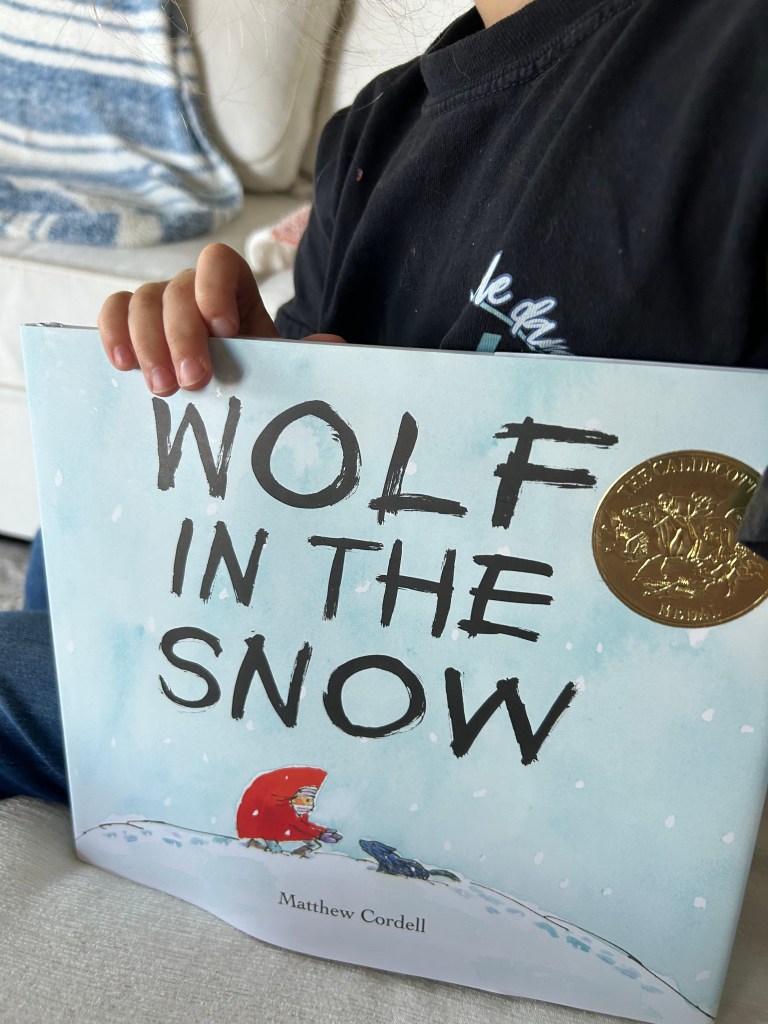
    So, what better way to capture both of her interests than in a picture book titled Wolf in the Snow ?

    SUMMARY
    Wolf in the Snow recounts the adventure of a young girl who encounters a lost wolf pup during a swirling snowstorm.
    The young girl comes upon the wolf pup on her way home from school. The drifting snow makes travel difficult, but the young girl carries the wolf pup even as the snow accumulates. The young girl is determined but the growing mounds of snow make travel difficult. Travel is also difficult for the wolfpack that is hunting for their lost pup. Eventually, the wolfpack and the young girl come face to face…and the tension is real!
    Of course, the story brings to mind the fairy tales like Little Red Riding Hood (EX: the girl wears a red coat, the girl is on her way to a house).
    The ending, however, is not Grimm Brothers gruesome, but wholly satisfying to wolf lovers of all ages.

    AUDIENCE:
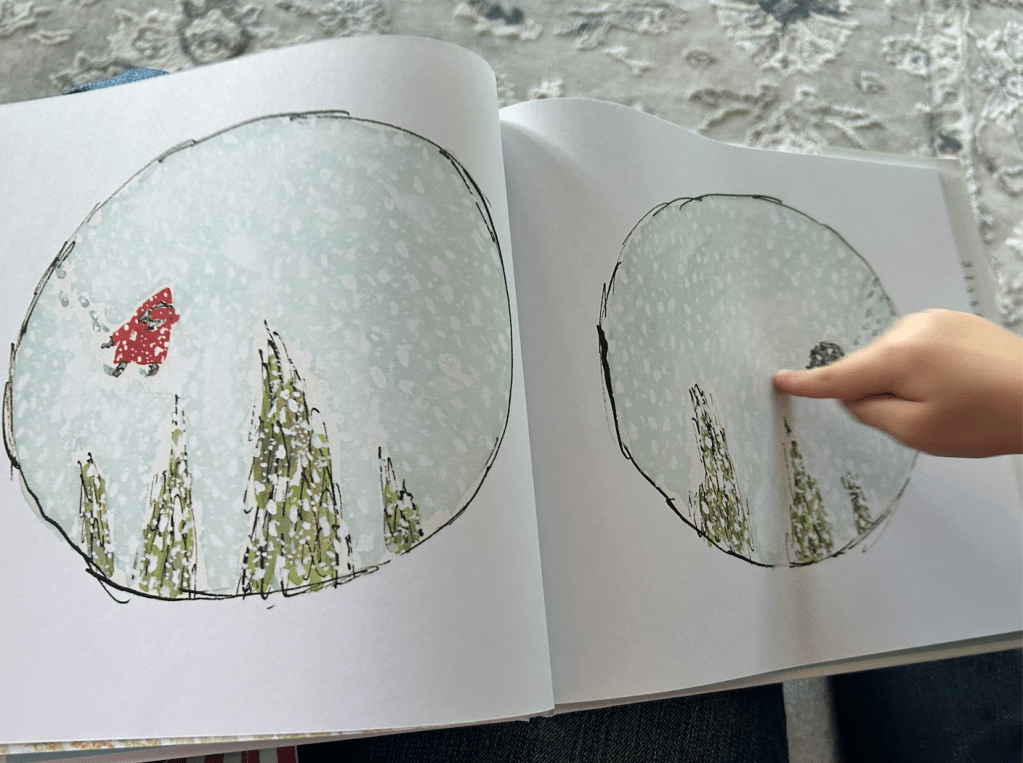
    Wolf in the Snow is an almost totally wordless picture book, ideal for readers of all ages (2 years and up). As the text is in the pictures, there are multiple ways readers may choose to “tell” this story.
    There are children who will want to linger over the details embedded on each page. And for toddlers who may have a short attention span, this book can be a fast read.
    Note: There is no dialogue, but be prepared to give a few “howls” or “barks”.

    AUTHOR/ILLUSTRATOR:
    Wolf in the Snow was released in 2017 by author/illustrator Matthew Cordell. The book was favorably received by critics and was awarded the 2017 Boston Globe-Horn Book honor award and the 2018 Caldecott Medal for illustrations.

    All of the pages have illustrations that feature the falling snow. The lightly falling flakes at the beginning soon give way to swirling whiteout conditions.
    This is very dramatic snow!

    Cordell has written and illustrated other picture books, including Trouble Gum, King Alice, Another Brother, and Hello! Hello!

    READING OPPORTUNITIES:
    A word of caution when choosing a wordless picture book for a three-year old. There will be MANY questions. most beginning with “WHY?” For example:

    • “Why does the girl go to school in the woods?”
    • “Why is she walking by herself?”
    • “Why is the wolf cub alone?”
    • “Why is she tired?”
    • “Why does the wolf pack howl?”

    All good questions.
    Wolf in the Snow answers “why” and more.

  • Read Me This Book: Pinkalicious

    “I want pink…pink…Pinkalicious!” exclaims Sloane.
    This picture book is a frequent choice for her.
    I can also appreciate this genius idea of selling the color pink to little girls.

    SUMMARY:

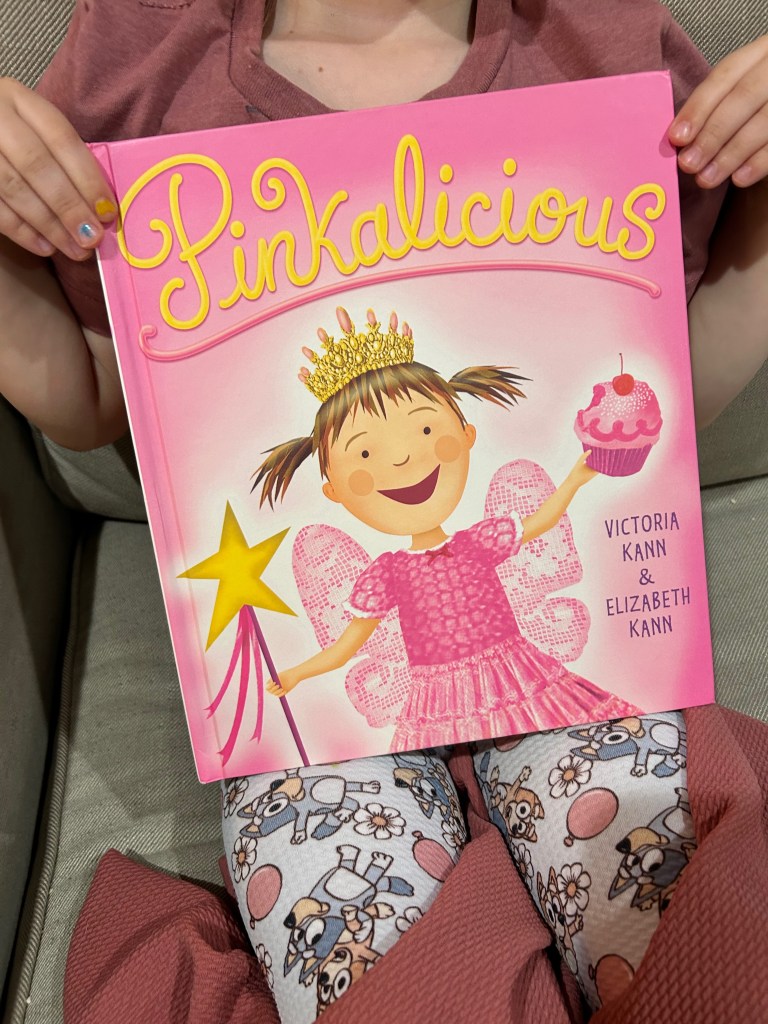
    In the beginning, Pinkalicious (and yes, that is her name) makes delicious pink cupcakes with her mother. But, she eats so many of these mouthwatering pinky sweets that eventually her parents say “NO MORE”!

    However, her enthusiasm for pink cupcakes does not stop. Soon her skin turns pink, a medical condition known as “pinkititus ” according to her doctor:

    “The next morning when I woke up, I was pink!
    My face was pink, my hands were pink and my belly was pink!”

    So her doctor prescribes a remedy of green foods.
    Even then, Pinkalicious will not be stopped from dining on pink cupcakes until she wakes up and discovers that eating all that pink has left her RED!

    The cure for such disobedience?
    Pinkalicious must feed on “icky green relish,” artichokes, brussel sprouts, spinach or any other green vegetable in order to return to her pre-pink state.

    AUDIENCE:

    The book is recommended for readers 4 to 8 years, but pink-loving toddlers will enjoy many of details in the illustrations. For example, Pinkalicious’ princess/ fairy ensemble, a pink chiffon dress accessorized with wand and tiara, is a fashion statement admired -and sometimes duplicated- by Sloane.

    AUTHOR/ILLUSTRATOR:

    Pinkalicious was co-written by sisters Victoria and Elizabeth Kann with Victoria doing the illustrations. Apparently the plot of the book began as an April Fool’s joke when Victoria sent the story to friends and family explaining that her daughter turned pink after eating too many pink cupcakes. 

    The book was first published in 2006, and was followed by Purplicious (2007), Goldilicious (2009) and Silverlicious (2011).
    Victoria has continued writing and illustrating with 64 books in the Pinkalicious series.

    READING OPPORTUNITIES:

    Pinkalicious is an entry level start to young reader picture book schadenfreude, better known as the state of taking joy in the misfortune of others.

    As evidence, Sloane stares intently at the illustration of Pinkalicious stamping her feet.
    “She’s being bad!” she will tell me happily.

    Sloane understands that if you disobey your parents, then bad things will happen. She clearly enjoys the misfortunes of Pinkalicious and is delighted to explain to me, “See? She got red.”
    Then, she will laugh.

    Oddly enough, Pinkalicious has been banned in schools in at least one state when parents raised concerns about the main character eating too many sweets.

    I am confident that Sloane could happily explain the book to those parents.

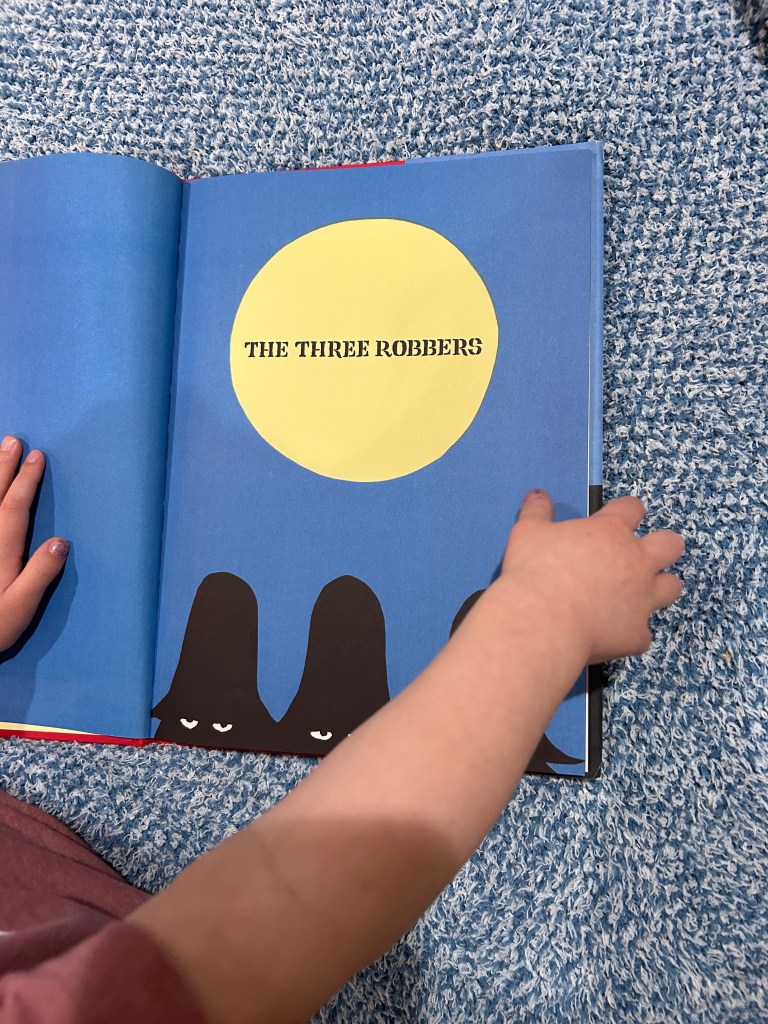
  • Read Me This Book: The Three Robbers

    I admit that Sloane did not pick The Three Robbers as a bedtime story.
    I did.
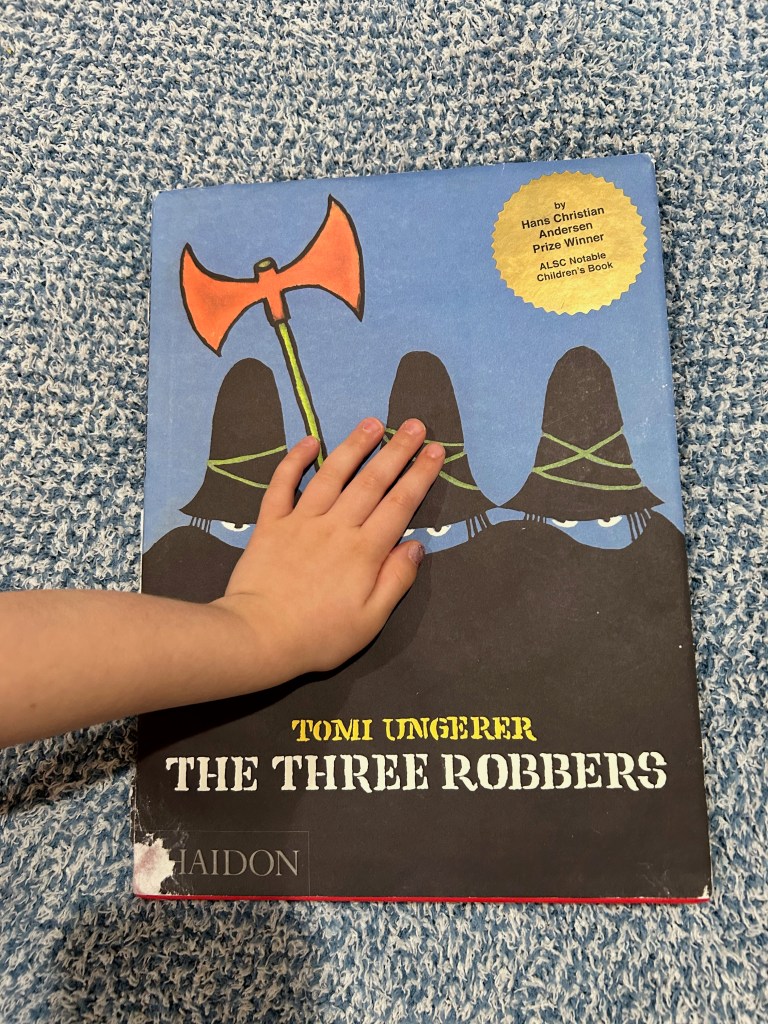
    But the cover art with three villainous characters and one huge red axe caught her attention, and she agreed.

    Now, this picture book is included in our rotation of bedtime reads.

    SUMMARY
    The Three Robbers is a simple folk tale and begins as most folk tales do:

    “Once upon a time, there were three fierce robbers.”

    These fierce robbers terrorize travelers using three very dangerous -but attractively illustrated – weapons:

    • Pepperblower: “To stop carriages, the robbers blew pepper into the horses’ eyes.”
    • Huge Red Axe: “With the axe, they smashed the carriage wheels.”
    • Blunderbuss: “And with the blunderbuss, they threatened the passengers and plundered them.”

    The robbers carry their stolen goods to a cave high in the mountains. One night they stopped a carriage, and take the only thing of value, a little girl name Tiffany.
    When Tiffany sees all the treasure piled into the cave, she asks the robbers what they intend to do with their trunks of gold?
    A change of heart ensues, and the three robbers decide to use their ill-gotten gains to help lost or abandoned children.

    AUDIENCE:
    Words such as “threatened”, “plundered”, “loot”, “abandoned”, and “blunderbuss” are not the usual vocabulary a reader expects in a picture book for children. But, the vivid illustrations in primary colors (dark blues, bright reds, and creamy yellows) will capture the attention of even the most distracted toddler.

    Moreover, these illustrations help to define the words.
    Faceless, the robbers’ eyes peer out from under their enormous black caps. (“threatened”). The passengers are seen being robbed (“plundered”), a small child is left alone on a doorstep (“abandoned”), and that “huge red axe” is huge and red…and menacing!

    That said audiences from ages 3 to adult will enjoy this picture book, although many recommendations place the text in ages 8-14.

    AUTHOR/ILLUSTRATOR:
    The French author/illustrator Jean-Thomas Ungerer published The Three Robbers in 1961. (Tomi) Ungerer grew up in the Nazi occupied region of Alsace, France. That experience may account for the sometimes dark turns one might read in his books or see in his illustrations.

    As a young man, Ungerer was influenced by illustrations in The New Yorker magazine. From 1951-1974, he wrote and illustrated over 30 children’s books (including the notable Moon Man and the art for the first editions of Flat Stanley) before switching to writing satire and more adult themed literature. (including the 1964 film poster design for Dr. Strangelove) .

    He was awarded the Commander of the Legion d’Honneur (2018), and the
    Hans Christian Andersen Award for Illustration (1998).

    Ungerer passed away in 2019. His website: https://www.tomiungerer.com/books

    READING OPPORTUNITIES:

    The Three Robbers was a favorite bedtime read of Sloane’s father. He would echo back the words to me as we read…”blunderbuss”…”axe”…”plunder”.
    He was not interested in Tiffany.
    He liked the robbers.

    The book has little text in its 40 pages. I found a used copy several summers ago, and I put it aside so that we would always have a copy. I did not want this title to disappear into obscurity.

    I need not have worried. This past June 2025, The NYTimes Book Review published The Lemony Snicket Anti-Summer Summer Reading List for children. There was The Three Robbers, #3 on the recommendation list for children 8-14.

    In his review, Snicket poses the question, “What child ever forgets their first encounter with the word ‘blunderbuss’?”

    Really, what child would?


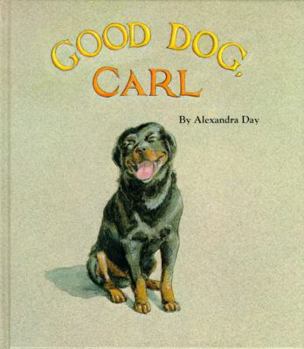
  • Read Me This Book: Good Dog, Carl

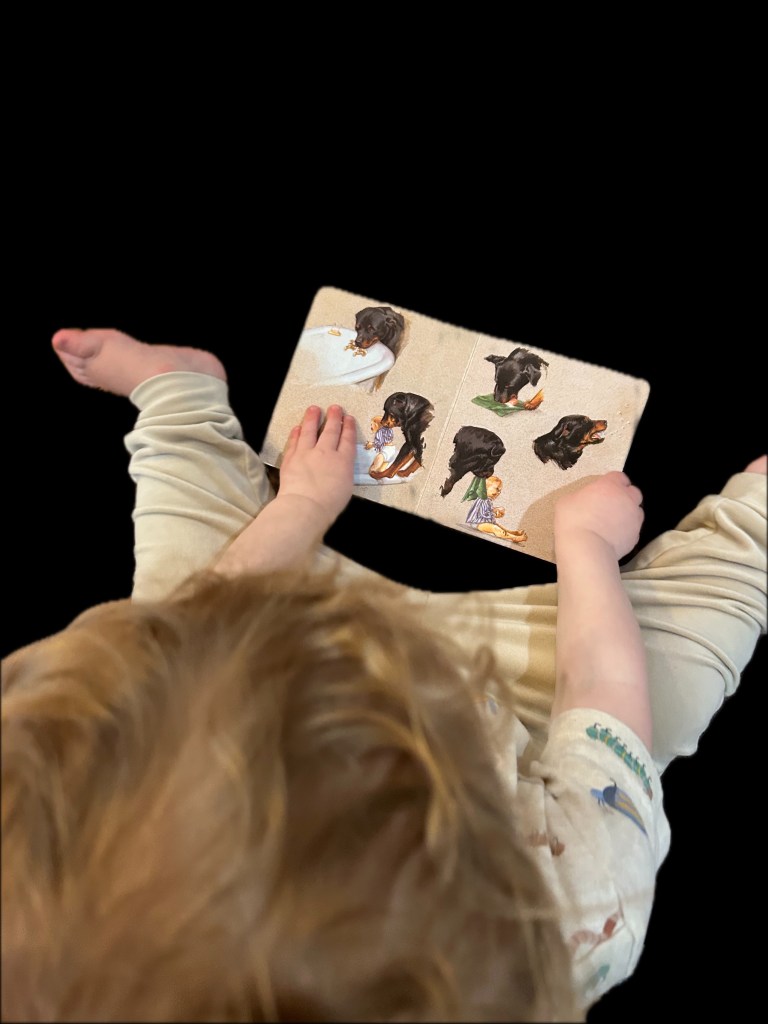
    When it is David’s turn to choose a book, he does not want me to “read” to him. He wants to show me a book.

    So what book does he choose to show Grandma?
    Good Dog, Carl.
    Even better, Good Dog, Carl as a board book!

    Summary
    At the book’s opening, there is a woman next to a baby in a crib. The woman leans down and gives instructions to a large dog:

    “Look after the baby, Carl.
    I’ll be back shortly.”

    What follows is a wordless story of the dog’s day as he cares for the baby: playing, dressing, feeding, cleaning, and finally, tucking the baby back into her crib for a nap.

    Carl is a Rottweiler, a large dog breed noted for its intelligence and its protective nature. As he “looks after the baby”, Carl is also unintentionally hilarious.

    So, adult readers, please put off your concern as Carl entertains the baby by playing with Mom’s makeup or as he pushes the baby down the laundry chute. Don’t flinch when Carl teaches the baby to swim in the fish tank.
    All will be well in the end.

    Audience
    The board book is ideal for children 1-3 years old.
    NOTE: David’s father also loved Good Dog, Carl which came out the year he was born.
    Perhaps it is genetic? But dogs are generally considered responsible caregivers (remember Lassie? Balto? Dug? Toto?)
    That universal belief makes this a picture book that can be enjoyed by all ages.

    Author/Illustrator
    Good Dog, Carl was written and illustrated by Alexandra Day  (aka: Sandra Louise Woodward Darling) in 1985. Carl was based on her own dog, Toby; the baby was based on her daughter, Madeleine. There are 36 pages with detailed illustrations.
    She has written 14 more Carl titles since then.

    Reading Opportunities
    The sequence of events in this picture book does not matter to David. Instead, he finds the individual illustrations that he likes. He will pause at Carl opening the refrigerator to feed the baby. He will chuckle at the mess Carl makes dropping milk on the floor. He’ll turn several pages to point and explain to me that Carl is using the “bath”. Then, he will return to the pictures with food on the floor. He will chuckle again.

    For David, Carl’s action are entirely believable. He will sit, focused on turning the thick pages for several minutes. The board book withstands the constant back and forth of his small fingers.
    That quiet interaction is a bit of a miracle, and a testament to the power of this picture book to entertain one very active toddler!

    Good dog, Carl!

  • Read Me This Book: Knight Owl

    Sloane hands me the book Knight Owl.
    “Again! Read me this one again, Grandma,” she pleads.
    She really does not need to beg.
    I will happily read and then reread Knight Owl whenever asked.

    Why would I agree to such repetition?
    The illustrations and clever word play are what make Knight Owl a favorite for both the reader as well as a toddler.

    Summary: 
    Owl dreams of being a knight. When knights start disappearing from the castle, a call goes out to the kingdom for those interested in attending Knight School. Despite his tiny size, and his habit of falling asleep during the day, Owl is accepted.

    “Knight school was hard, but Owl worked and worked.
    He graduated with honor, as all knights do”

    (see the word play: “knight school”?, “with honor”?)

    Owl is assigned to the Knight-Night Watch. While the other knights tend to fall asleep, Owl patrols the castle ramparts with enormously long lance in hand, protecting the castle .
    Suddenly, he has to confront a very large (and hungry) intruder!
    While Owl may be tiny, he still has his wits!

    Audience: 
    Suggested ages for this picture book are 3-6 years, however, all readers will be charmed by this steadfast little Owl whose true measure is in his heroism.
    There are 48 beautifully illustrated pages with limited text. The wide-eyed little owl is often dwarfed against the larger dark outlines of his fellow knights or the shadowy castle battlements.

    Author/Illustrator: 
    Christopher Denise was awarded the Caldecott Medal (illustrations) for Knight Owl in 2022 by the American Library Association.
    Denise has illustrated over 20 books including Alison McGhee’s Firefly Hollow, Rosemary Wells’ Following Grandfather, Phyllis Root’s Oliver Finds His Way, and for Brian Jacques’ Redwall .
    He has also illustrated for his wife Anika Denise’s Bunny in the Middle and Baking Day at Grandma’s.

    Knight Owl was Denise’s debut as an author-illustrator. The picture book remained on the New York Times bestseller list for 15 weeks.

    Reading Opportunities:
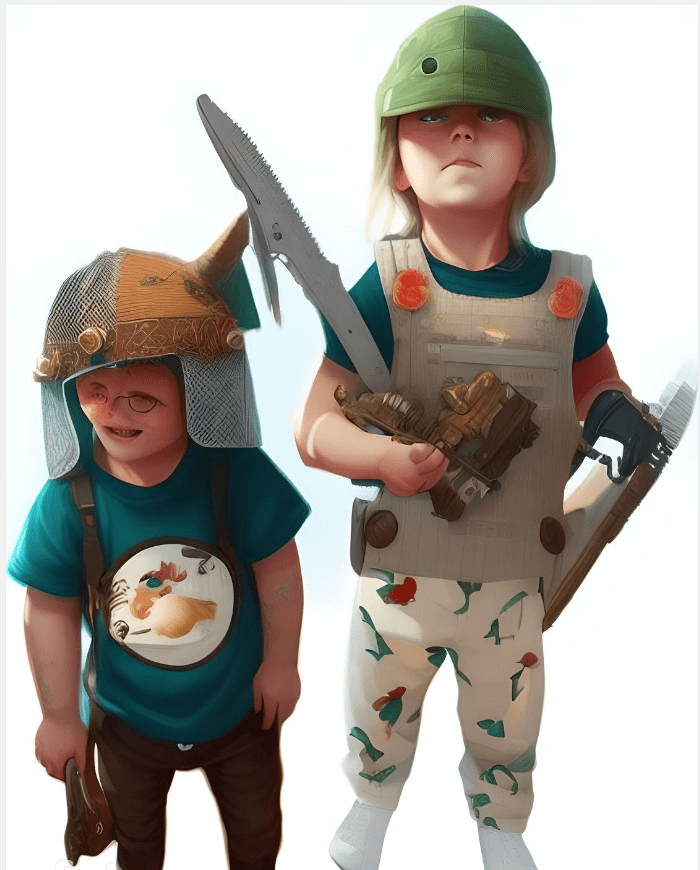
    Our regular reading of Knight Owl has been supported with “knight-wear”.
    Sloan and her little brother, David, have collected a few plastic medieval weapons and (on occasion) engaged in combat with an inflatable dragon.

    We have also added the picture book sequel Knight Owl and Early Bird to our evening routine. In this second adventure, Knight Owl is befriended by an even smaller avian, Early Bird, who proves to be a challenging chatter-box during the day. The same rich illustrations are in this sequel. The fire-lit, cozy castle interiors are contrasted with the dangerous wolves who lurk in the forest below the castle walls (and in the margins of the text).

    Another book is due out in the Fall 2025, this time a board book titled Knight Owl’s Little Christmas.

    Sloane can recite both picture books by heart.
    She tells me she can be “brave” like Knight Owl.
    Then she adjusts her helmet to stare out at the night sky and howls like a wolf…”Ahoooooooooooooo” for Knight Owl.

  • Read Me This Book….”Snow”

    Sloane hands me the book Snow.
    “Read me this one, Grandma,” she says.
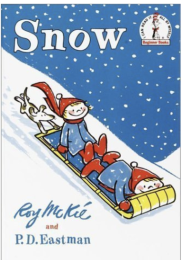
    I instantly recognize the cover.
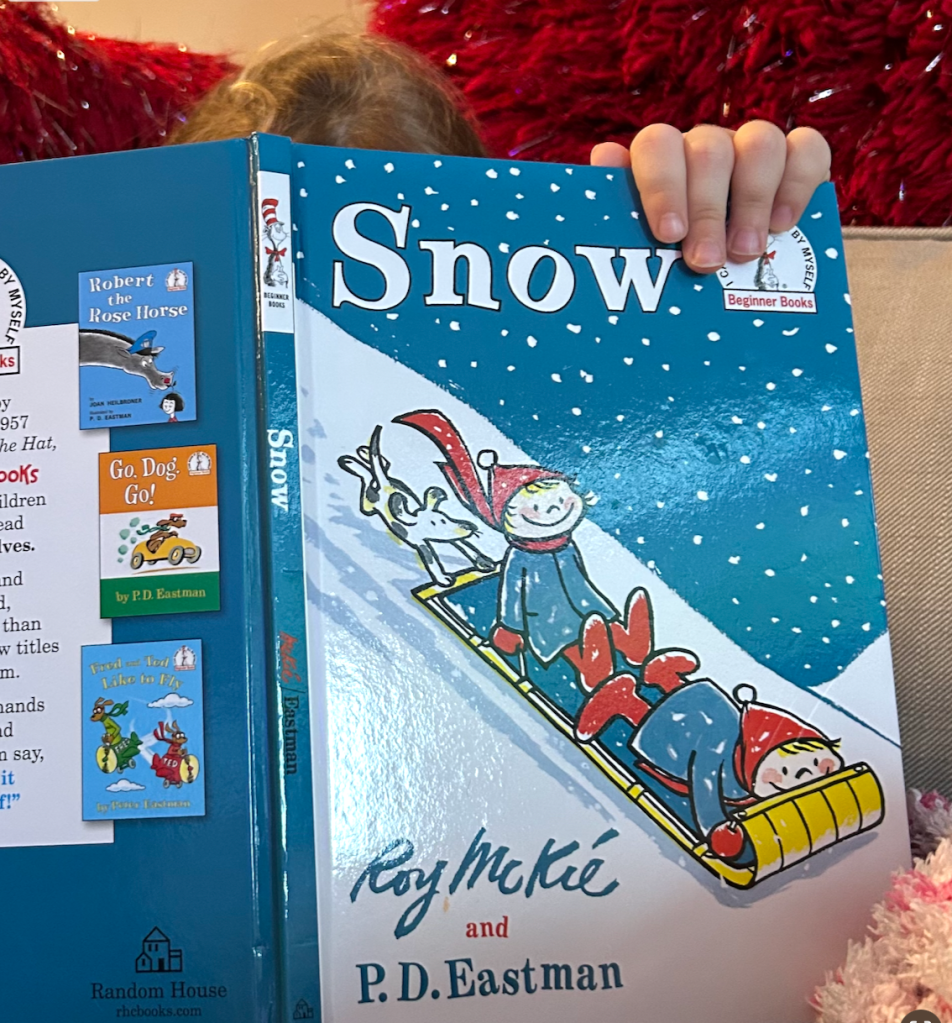
    Two children are in a toboggan racing down a hill. Their very wide faces have very wide smiles. A dog hangs off the back, front paws clutching the sled, back legs up off the ground.
    Snowflakes are everywhere.
    Speed. Joy.
    It’s a very active illustration.
    “Snow!” I exclaim to Sloane. “I know this book. It’s about all the things you can do in the snow.”

    Summary: 
    The plot is simple. Two children go out and play in freshly falling snow. They catch snowflakes on their tongues. They sled. They watch sleigh rides. They make a large snowman.
    The rhymes are simple and repeatable.

    “What is snow?
    We do not know.
    But snow is fun
    To dig and throw.”

    There are several verses in this book that echo the verses in other children’s books (such as the questions posed in Green Eggs and Ham):

    “Do you like snow?
    Do you like it?
    Yes or no?”
    “Oh yes, oh yes!
    I do like snow!”
    and
    “Do you like it in your face?”
    “Yes, I like it any place.”

    By the book’s conclusion, the children save what is left of a melting snowman in their refrigerator for another day.

    Audience: 
    Snow is a wonderful picture book as a pre-school read, but it was originally designed as an early reader book for the Beginner Book Series. This series was founded by Phyllis Cerf and Ted Geisel in 1957 starting with the publication of The Cat in the Hat.
    All Beginner Books were developed using the vocabulary from a list of 379 words considered basic for young readers.
    That makes Snow an “I can read it” opportunity for students through grade 3.

    Author/Illustrator: 
    I was in kindergarten when “Snow” was released, October 12, 1962. It was the 27th book released as part of the Beginner Books Series.
    The author P.D. Eastman also wrote and illustrated a number of other classics including other favorites Go, Dog. Go! and Are You My Mother?

    On Snow, however, Roy McKie was the illustrator. McKie was also noted for his collaborations with Theodore Geisel (Dr. Seuss). In Snow, Mckie’s illustrations are cartoon-like with primary colors-bright reds, yellows and blues.

    Reading Opportunities:

    The book is ideal for any season, but reading this book in the winter whenever or wherever snow is available seems particularly appropriate. Children will enjoy the illustrations even without the text.

    “So, do you like snow?” I asked Sloane after we finish.
    She pauses, tracing the toboggan with her finger.
    Snow the book…or the snow outside?” I continue.
    It’s a silly question.
    “Both,” she says.

  • “See, Touch, Feel: ABC”

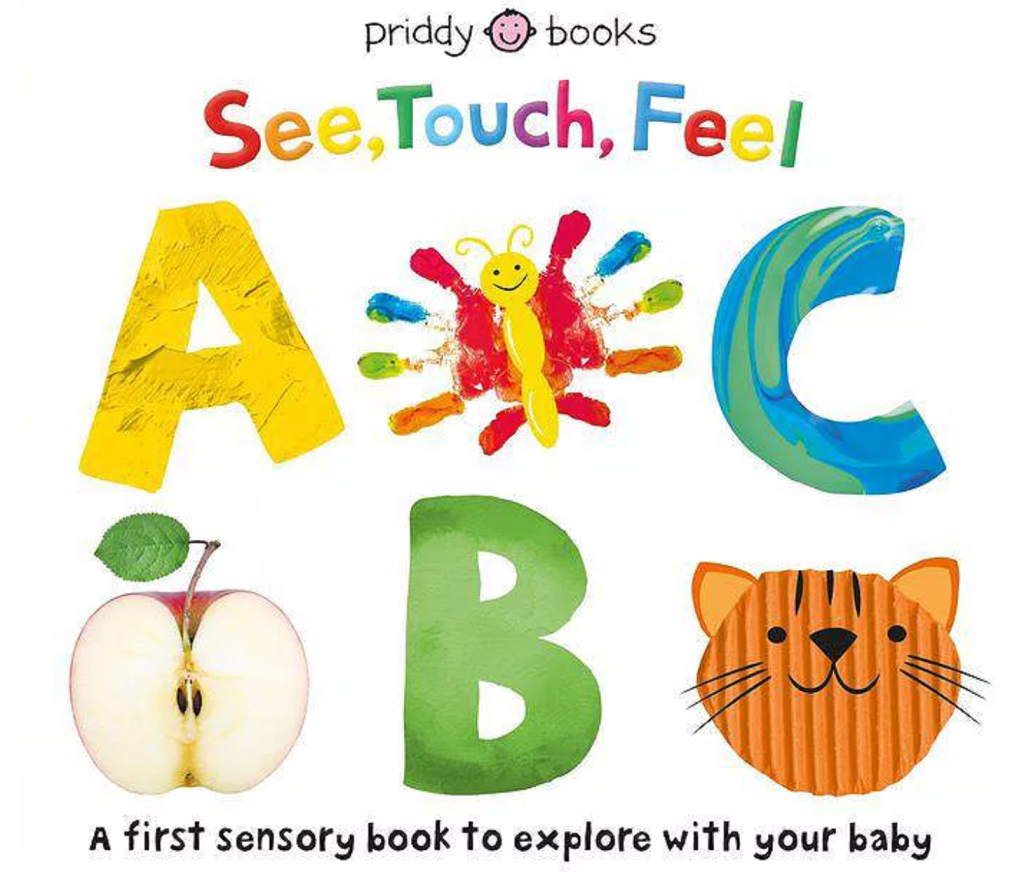
    David is 14 months old when he proudly picks up a book and sits on the floor next to me. He has selected Roger Priddy’s See, Touch, Feel: ABC.

    As of now, this is his favorite book.

    David opens the book himself to the “G is for Goose; H is for Heart” two-page spread. There is a wonderful sensory detail of a raised printed yarn heart. He rubs his hand over this illustration several times because he likes the “bumpy” feel.

    Summary: This is an ABC book. Each page represents a letter and has very bright high-gloss illustrations. Look closely at the illustrations and you will notice the way baby hand prints (B is for butterfly) or foot prints (T is for tree) are incorporated into the design. Each page offers tactile opportunities for little hands to explore.

    Audience: The book also works best as a starting tool for teaching a baby or toddler “Concepts of Print”. At this early stage, learning how to hold a book or turn pages is a good goal. Teaching a young child to keep a book right side up is another building block to help familiarize babies and toddlers with books.

    Of course, the book is sturdy enough to be used by toddlers independently.

    That is a very good quality because David is NOT gentle with this book. He yanks on pages. He slaps both hands on the Queen’s face and pushes the book across the floor. He scrambles up to chase and grabs to open another page:
    O is for the adorable Octopus, P is for Peacock.

    Fortunately, the book holds up.

    Reading Opportunities:

    There are short rhymes on each page for each letter, but reading these aloud is not necessary to having a child enjoy the book. For example, the rhymes “K is for Koala, so cuddly and small. L is for Lion, the king of them all” are not driving a plot. David pays little attention me reading, choosing instead to turn pages back and forth to his favorite pictures.

    I do, however, have some small quibbles with the book.

    C is for cat, D is for deer.” Deer? Not dog? Hmmmm.

    Y is for yellow.” Yellow? Yes, yellow is a noun and all the objects on the page (banana, lemon, chick, flower, star) are yellow, but the page strays from the pattern of one object per letter. So, why not yarn or yard or Yak ? (yak is no more strange than N is for narwhale)

    David does not seem to notice. He is more interested in patting the adorable Zebra on the last page.

    Author/Illustrator: Roger Priddy is the creator of Priddy Books, which publishes books for babies and young children. Priddy Books is a division of Macmillan Publishers and books published by the imprint have won several Practical Pre-School Awards.