Tag: childrens-books

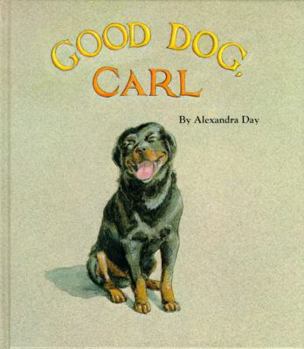
  • Read Me This Book: Good Dog, Carl

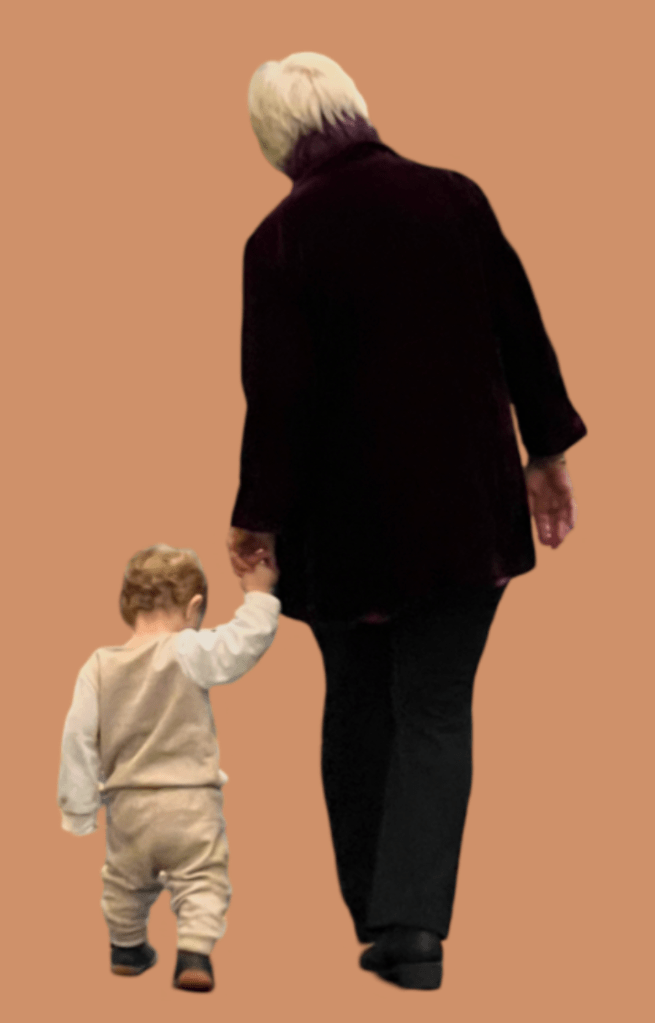
    When it is David’s turn to choose a book, he does not want me to “read” to him. He wants to show me a book.

    So what book does he choose to show Grandma?
    Good Dog, Carl.
    Even better, Good Dog, Carl as a board book!
    Summary
    At the book’s opening, there is a woman next to a baby in a crib. The woman leans down and gives instructions to a large dog:

    “Look after the baby, Carl.
    I’ll be back shortly.”

    What follows is a wordless story of the dog’s day as he cares for the baby: playing, dressing, feeding, cleaning, and finally, tucking the baby back into her crib for a nap.

    Carl is a Rottweiler, a large dog breed noted for its intelligence and its protective nature. As he “looks after the baby”, Carl is also unintentionally hilarious.

    So, adult readers, please put off your concern as Carl entertains the baby by playing with Mom’s makeup or as he pushes the baby down the laundry chute. Don’t flinch when Carl teaches the baby to swim in the fish tank.
    All will be well in the end.

    Audience
    The board book is ideal for children 1-3 years old.
    NOTE: David’s father also loved Good Dog, Carl which came out the year he was born.
    Perhaps it is genetic? But dogs are generally considered responsible caregivers (remember Lassie? Balto? Dug? Toto?)
    That universal belief makes this a picture book that can be enjoyed by all ages.

    Author/Illustrator
    Good Dog, Carl was written and illustrated by Alexandra Day  (aka: Sandra Louise Woodward Darling) in 1985. Carl was based on her own dog, Toby; the baby was based on her daughter, Madeleine. There are 36 pages with detailed illustrations.
    She has written 14 more Carl titles since then.

    Reading Opportunities
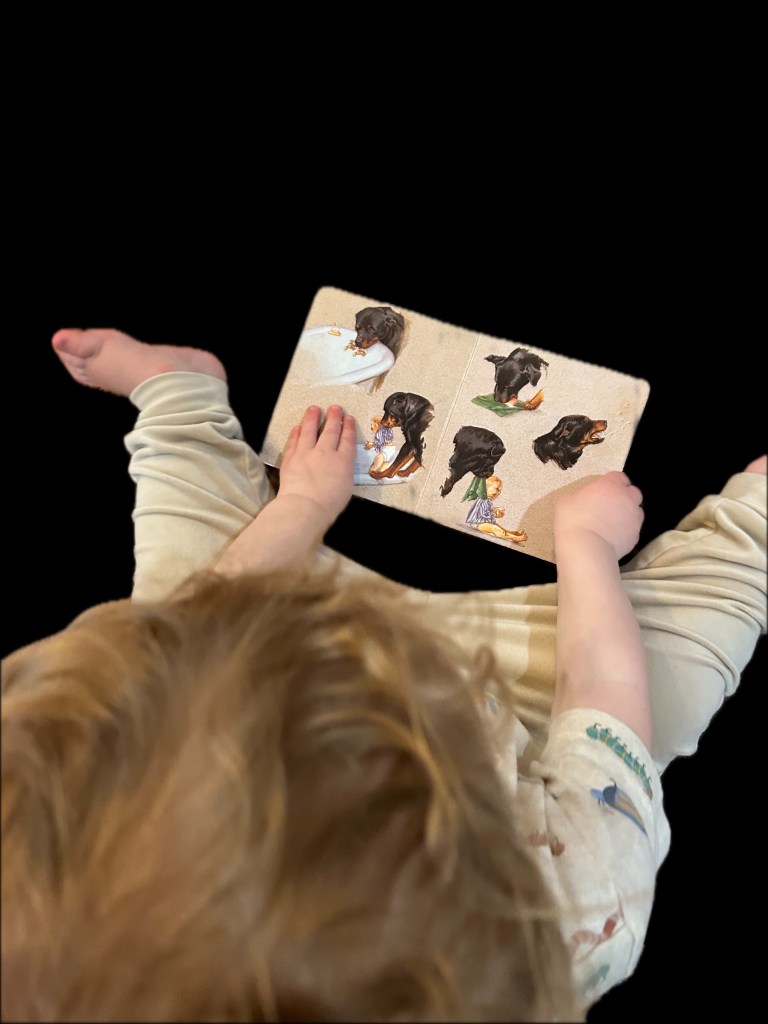
    The sequence of events in this picture book does not matter to David. Instead, he finds the individual illustrations that he likes. He will pause at Carl opening the refrigerator to feed the baby. He will chuckle at the mess Carl makes dropping milk on the floor. He’ll turn several pages to point and explain to me that Carl is using the “bath”. Then, he will return to the pictures with food on the floor. He will chuckle again.

    For David, Carl’s action are entirely believable. He will sit, focused on turning the thick pages for several minutes. The board book withstands the constant back and forth of his small fingers.
    That quiet interaction is a bit of a miracle, and a testament to the power of this picture book to entertain one very active toddler!

    Good dog, Carl!
  • Read Me This Book: Knight Owl

    Sloane hands me the book Knight Owl.
    “Again! Read me this one again, Grandma,” she pleads.
    She really does not need to beg.
    I will happily read and then reread Knight Owl whenever asked.

    Why would I agree to such repetition?
    The illustrations and clever word play are what make Knight Owl a favorite for both the reader as well as a toddler.

    Summary: 
    Owl dreams of being a knight. When knights start disappearing from the castle, a call goes out to the kingdom for those interested in attending Knight School. Despite his tiny size, and his habit of falling asleep during the day, Owl is accepted.

    “Knight school was hard, but Owl worked and worked.
    He graduated with honor, as all knights do”

    (see the word play: “knight school”?, “with honor”?)

    Owl is assigned to the Knight-Night Watch. While the other knights tend to fall asleep, Owl patrols the castle ramparts with enormously long lance in hand, protecting the castle .
    Suddenly, he has to confront a very large (and hungry) intruder!
    While Owl may be tiny, he still has his wits!

    Audience: 
    Suggested ages for this picture book are 3-6 years, however, all readers will be charmed by this steadfast little Owl whose true measure is in his heroism.
    There are 48 beautifully illustrated pages with limited text. The wide-eyed little owl is often dwarfed against the larger dark outlines of his fellow knights or the shadowy castle battlements.

    Author/Illustrator: 
    Christopher Denise was awarded the Caldecott Medal (illustrations) for Knight Owl in 2022 by the American Library Association.
    Denise has illustrated over 20 books including Alison McGhee’s Firefly Hollow, Rosemary Wells’ Following Grandfather, Phyllis Root’s Oliver Finds His Way, and for Brian Jacques’ Redwall .
    He has also illustrated for his wife Anika Denise’s Bunny in the Middle and Baking Day at Grandma’s.

    Knight Owl was Denise’s debut as an author-illustrator. The picture book remained on the New York Times bestseller list for 15 weeks.

    Reading Opportunities:
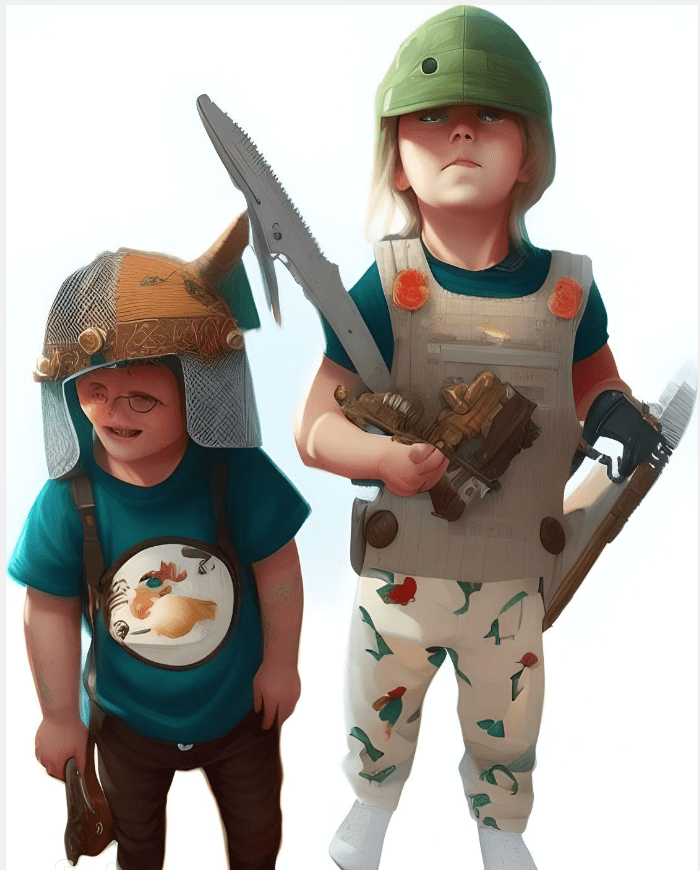
    Our regular reading of Knight Owl has been supported with “knight-wear”.
    Sloan and her little brother, David, have collected a few plastic medieval weapons and (on occasion) engaged in combat with an inflatable dragon.

    We have also added the picture book sequel Knight Owl and Early Bird to our evening routine. In this second adventure, Knight Owl is befriended by an even smaller avian, Early Bird, who proves to be a challenging chatter-box during the day. The same rich illustrations are in this sequel. The fire-lit, cozy castle interiors are contrasted with the dangerous wolves who lurk in the forest below the castle walls (and in the margins of the text).

    Another book is due out in the Fall 2025, this time a board book titled Knight Owl’s Little Christmas.

    Sloane can recite both picture books by heart.
    She tells me she can be “brave” like Knight Owl.
    Then she adjusts her helmet to stare out at the night sky and howls like a wolf…”Ahoooooooooooooo” for Knight Owl.

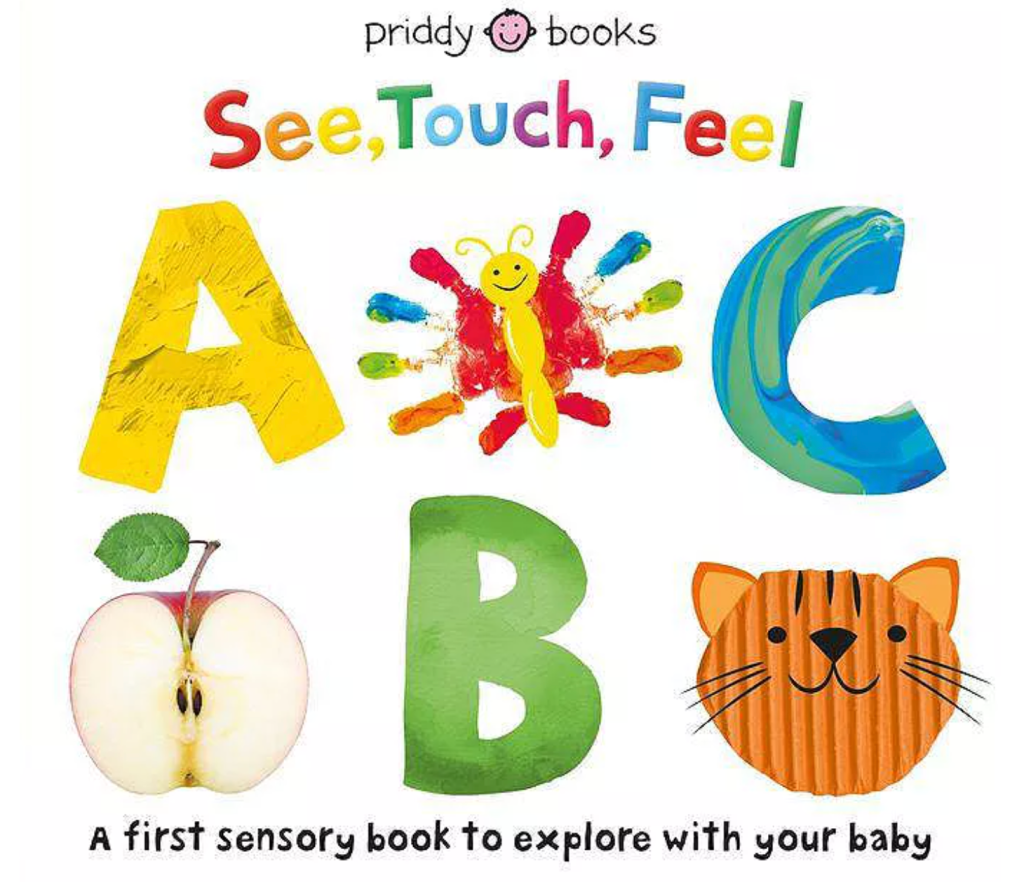
  • “See, Touch, Feel: ABC”

    David is 14 months old when he proudly picks up a book and sits on the floor next to me. He has selected Roger Priddy’s See, Touch, Feel: ABC.

    As of now, this is his favorite book.

    David opens the book himself to the “G is for Goose; H is for Heart” two-page spread. There is a wonderful sensory detail of a raised printed yarn heart. He rubs his hand over this illustration several times because he likes the “bumpy” feel.


    SUMMARY:


    This is an ABC book. Each page represents a letter and has very bright high-gloss illustrations. Look closely at the illustrations and you will notice the way baby hand prints (B is for butterfly) or foot prints (T is for tree) are incorporated into the design. Each page offers tactile opportunities for little hands to explore.

    AUDIENCE:

    The book also works best as a starting tool for teaching a baby or toddler “Concepts of Print”. At this early stage, learning how to hold a book or turn pages is a good goal. Teaching a young child to keep a book right side up is another building block to help familiarize babies and toddlers with books.

    Of course, the book is sturdy enough to be used by toddlers independently.

    That is a very good quality because David is NOT gentle with this book. He yanks on pages. He slaps both hands on the Queen’s face and pushes the book across the floor. He scrambles up to chase and grabs to open another page:
    “O is for the adorable Octopus, P is for Peacock.“

    Fortunately, the book holds up.

    READING OPPORTUNITIES:

    There are short rhymes on each page for each letter, but reading these aloud is not necessary to having a child enjoy the book. For example, the rhymes “K is for Koala, so cuddly and small. L is for Lion, the king of them all” are not driving a plot. David pays little attention me reading, choosing instead to turn pages back and forth to his favorite pictures.

    I do, however, have some small quibbles with the book.

    “C is for cat, D is for deer.” Deer? Not dog? Hmmmm.

    “Y is for yellow.” Yellow? Yes, yellow is a noun and all the objects on the page (banana, lemon, chick, flower, star) are yellow, but the page strays from the pattern of one object per letter. So, why not yarn or yard or Yak ? (yak is no more strange than N is for narwhale)

    David does not seem to notice. He is more interested in patting the adorable Zebra on the last page.

    AUTHOR/ILLUSTRATOR:

    Roger Priddy is the creator of Priddy Books, which publishes books for babies and young children. Priddy Books is a division of Macmillan Publishers and books published by the imprint have won several Practical Pre-School Awards.