Tag: reading

  • Read Me This Book – “Cat”

    David loves pop-up books.
    David also loves cats.
    So, it is no surprise that David loves to have me read the pop-up book Cat…repeatedly.
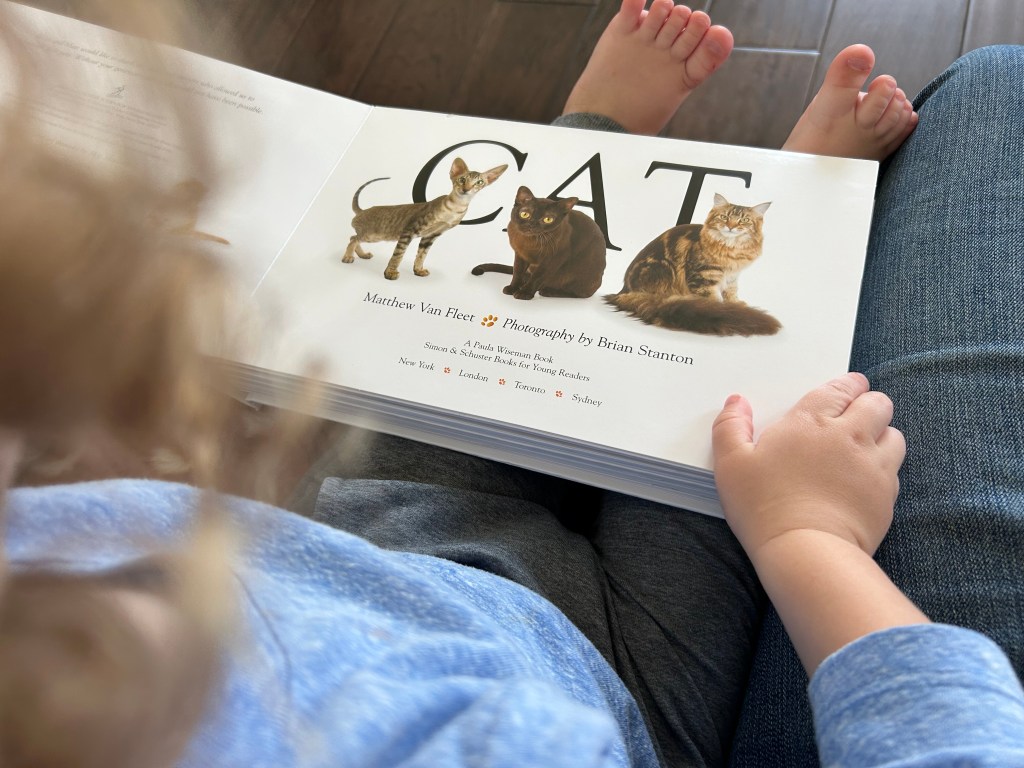
    Summary:
    There is no “plot” to this pop-up book.
    Instead, there are photographs of over 20 breeds of cats. These personality portraits are labeled with clever names like “cool cat” or “alley cat” or “scaredy-cat”.
    Young readers (and old) can play with multiple interactive pull-tabs and flaps that have cats “dipping” their paws in fishbowls, “pushing” balls of yarn or “peeking” out of rainboots.
    The final pages feature the entire cast of cats, and one dog, with each of their names and breed.

    Audience:
    Two truths:
    1. Toddlers love pop-up books, however,
    2. Pop-up books break.
    My David is a toddler and an expert destroyer of a pop-up book.
    But Cat is a particularly well-designed pop-up book. The flaps and tabs are thick enough to survive the tugging and pulling of his toddler fingers.
    Cat lovers could be another target audience. The cat portraits are charming and often humorous. The third of American households that own a cat might enjoy the portrayal of the different breeds.

    Author/Illustrator
    Matthew Van Fleet is a creative artist with multiple pop-up books to his credit. Several of his pop-ups feature other animals: Dog, Pet, Moo.
    He is a best-selling author with over 9.6 million copies of his books sold.

    Van Fleet’s collaborator Brian Stanton is a commercial photographer with a stellar ability to capture an animal’s personality.

    Reading Opportunities:
    Question: Can a two-year-old get a joke?
    Answer: One of the interactive puns delights David.
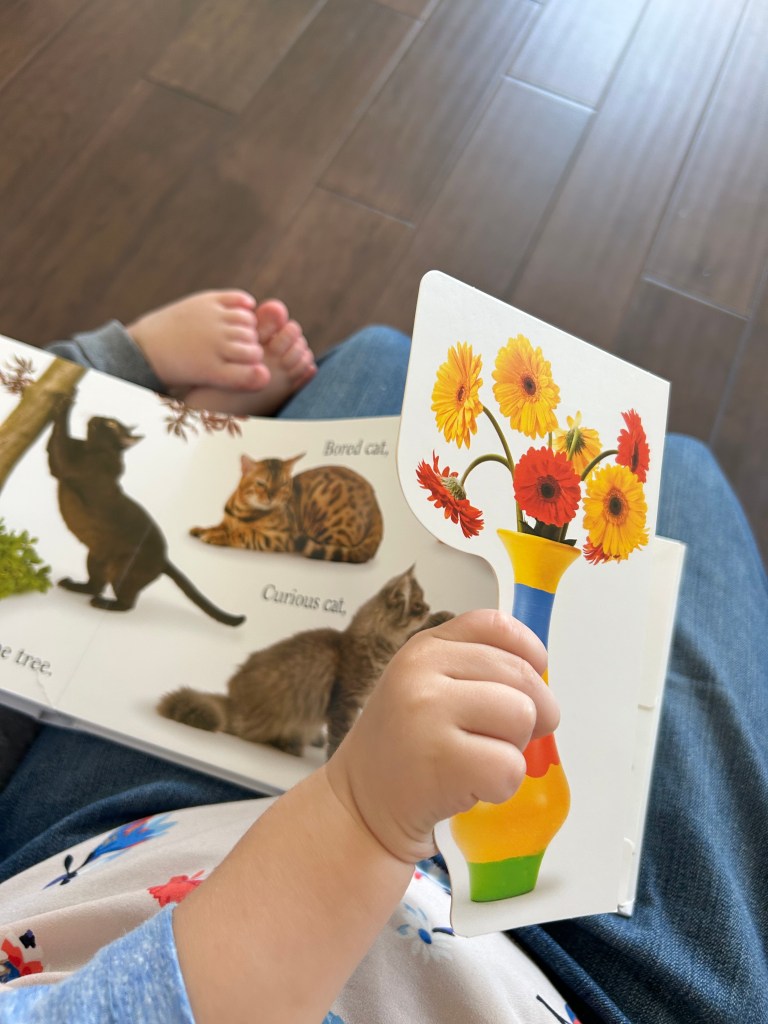

    A vase is pictured on a flap.
    David lifts the flap.
    A mortified cat is pictured beside broken pieces of the vase.
    I read and exclaim, “Catastrophe!”
    David chortles at the cat and points to the broken vase.
    He lifts the flap again and again and giggles each time.
    Proof that the pop-up book Cat is both artfully designed and that, yes, toddlers get the joke.

  • Read Me This One-“Wolf in the Snow”

    Winter is here, and Sloane is looking forward to snow.
    She has also developed a serious interest in wolves (or “wolfs” as she calls them).
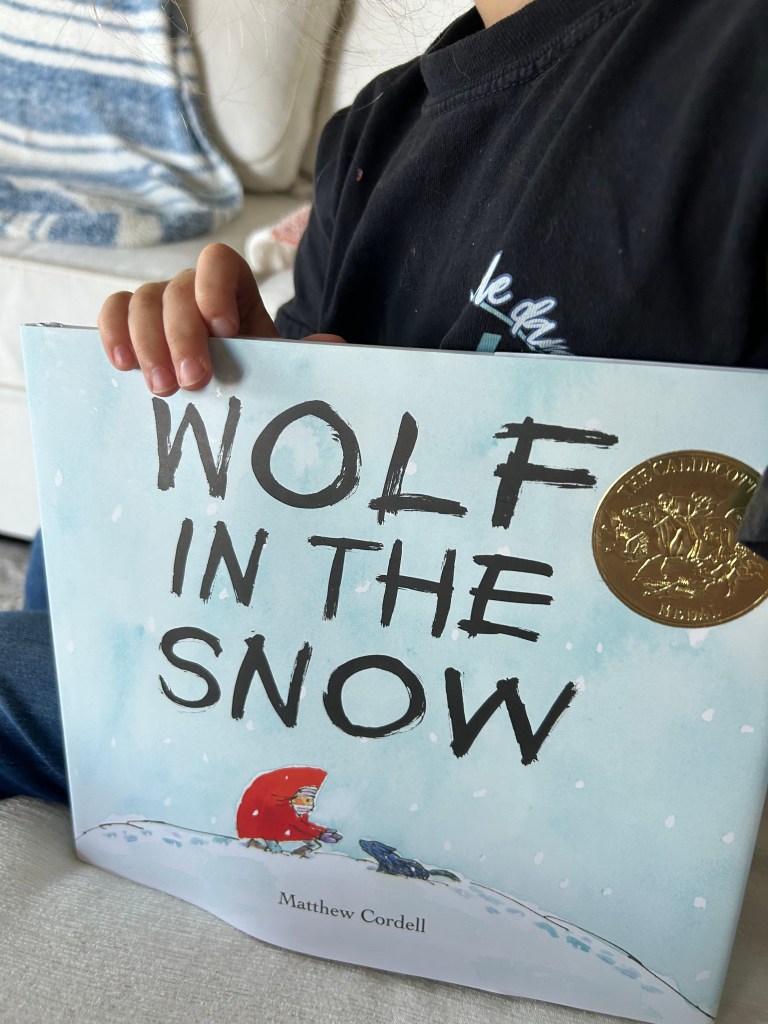
    So, what better way to capture both of her interests than in a picture book titled Wolf in the Snow ?

    SUMMARY
    Wolf in the Snow recounts the adventure of a young girl who encounters a lost wolf pup during a swirling snowstorm.
    The young girl comes upon the wolf pup on her way home from school. The drifting snow makes travel difficult, but the young girl carries the wolf pup even as the snow accumulates. The young girl is determined but the growing mounds of snow make travel difficult. Travel is also difficult for the wolfpack that is hunting for their lost pup. Eventually, the wolfpack and the young girl come face to face…and the tension is real!
    Of course, the story brings to mind the fairy tales like Little Red Riding Hood (EX: the girl wears a red coat, the girl is on her way to a house).
    The ending, however, is not Grimm Brothers gruesome, but wholly satisfying to wolf lovers of all ages.

    AUDIENCE:
    Wolf in the Snow is an almost totally wordless picture book, ideal for readers of all ages (2 years and up). As the text is in the pictures, there are multiple ways readers may choose to “tell” this story.
    There are children who will want to linger over the details embedded on each page. And for toddlers who may have a short attention span, this book can be a fast read.
    Note: There is no dialogue, but be prepared to give a few “howls” or “barks”.

    AUTHOR/ILLUSTRATOR:
    Wolf in the Snow was released in 2017 by author/illustrator Matthew Cordell. The book was favorably received by critics and was awarded the 2017 Boston Globe-Horn Book honor award and the 2018 Caldecott Medal for illustrations.

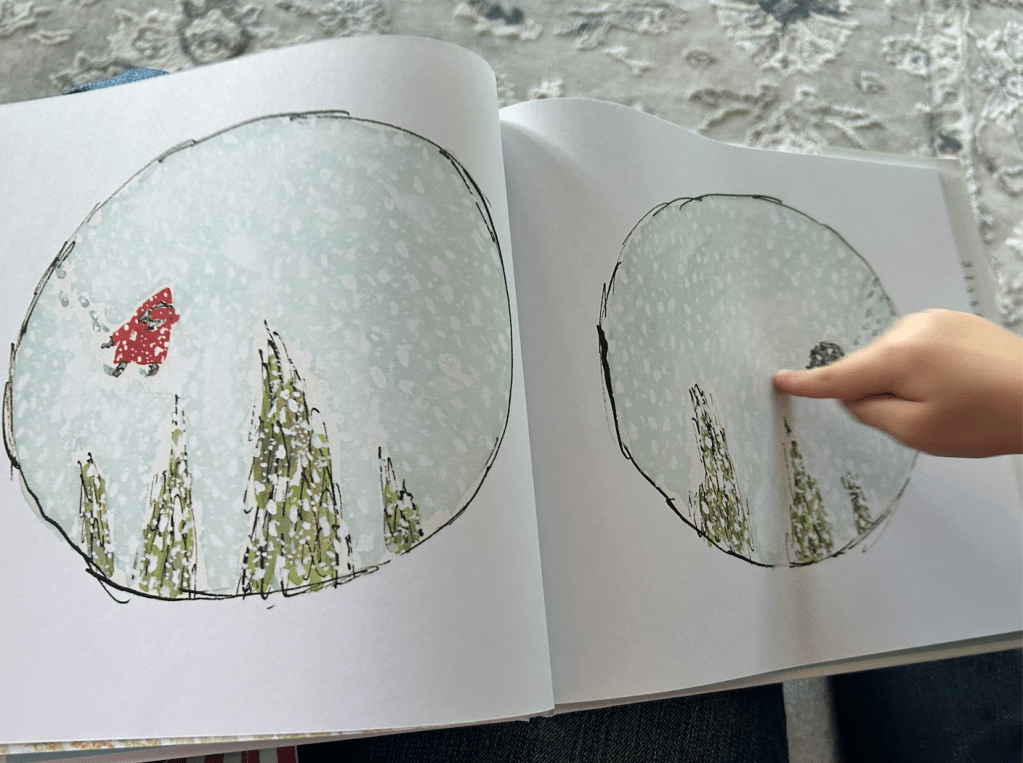
    All of the pages have illustrations that feature the falling snow. The lightly falling flakes at the beginning soon give way to swirling whiteout conditions.
    This is very dramatic snow!

    Cordell has written and illustrated other picture books, including Trouble Gum, King Alice, Another Brother, and Hello! Hello!

    READING OPPORTUNITIES:
    A word of caution when choosing a wordless picture book for a three-year old. There will be MANY questions. most beginning with “WHY?” For example:

    • “Why does the girl go to school in the woods?”
    • “Why is she walking by herself?”
    • “Why is the wolf cub alone?”
    • “Why is she tired?”
    • “Why does the wolf pack howl?”

    All good questions.
    Wolf in the Snow answers “why” and more.

  • Read Me This Book: Good Dog, Carl

    When it is David’s turn to choose a book, he does not want me to “read” to him. He wants to show me a book.

    So what book does he choose to show Grandma?
    Good Dog, Carl.
    Even better, Good Dog, Carl as a board book!

    Summary
    At the book’s opening, there is a woman next to a baby in a crib. The woman leans down and gives instructions to a large dog:

    “Look after the baby, Carl.
    I’ll be back shortly.”

    What follows is a wordless story of the dog’s day as he cares for the baby: playing, dressing, feeding, cleaning, and finally, tucking the baby back into her crib for a nap.

    Carl is a Rottweiler, a large dog breed noted for its intelligence and its protective nature. As he “looks after the baby”, Carl is also unintentionally hilarious.

    So, adult readers, please put off your concern as Carl entertains the baby by playing with Mom’s makeup or as he pushes the baby down the laundry chute. Don’t flinch when Carl teaches the baby to swim in the fish tank.
    All will be well in the end.

    Audience
    The board book is ideal for children 1-3 years old.
    NOTE: David’s father also loved Good Dog, Carl which came out the year he was born.
    Perhaps it is genetic? But dogs are generally considered responsible caregivers (remember Lassie? Balto? Dug? Toto?)
    That universal belief makes this a picture book that can be enjoyed by all ages.

    Author/Illustrator
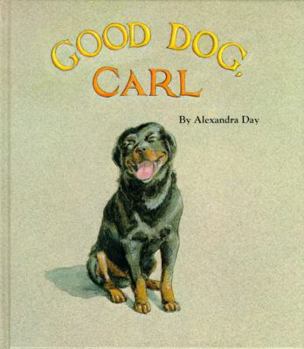
    Good Dog, Carl was written and illustrated by Alexandra Day  (aka: Sandra Louise Woodward Darling) in 1985. Carl was based on her own dog, Toby; the baby was based on her daughter, Madeleine. There are 36 pages with detailed illustrations.
    She has written 14 more Carl titles since then.

    Reading Opportunities
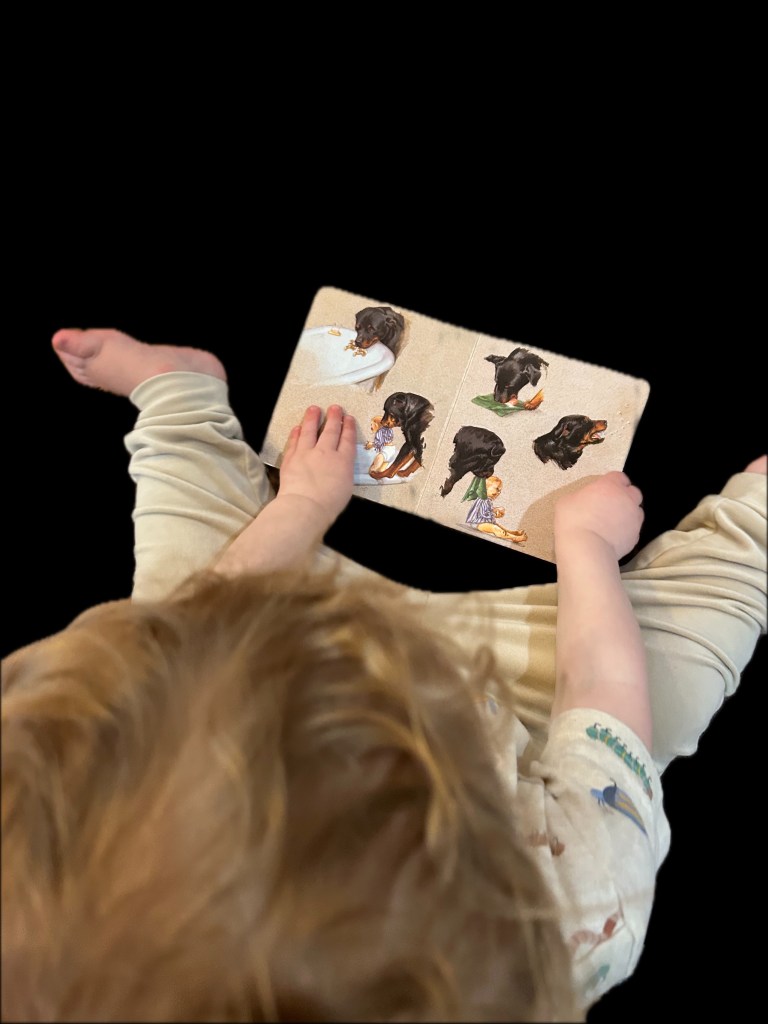
    The sequence of events in this picture book does not matter to David. Instead, he finds the individual illustrations that he likes. He will pause at Carl opening the refrigerator to feed the baby. He will chuckle at the mess Carl makes dropping milk on the floor. He’ll turn several pages to point and explain to me that Carl is using the “bath”. Then, he will return to the pictures with food on the floor. He will chuckle again.

    For David, Carl’s action are entirely believable. He will sit, focused on turning the thick pages for several minutes. The board book withstands the constant back and forth of his small fingers.
    That quiet interaction is a bit of a miracle, and a testament to the power of this picture book to entertain one very active toddler!

    Good dog, Carl!